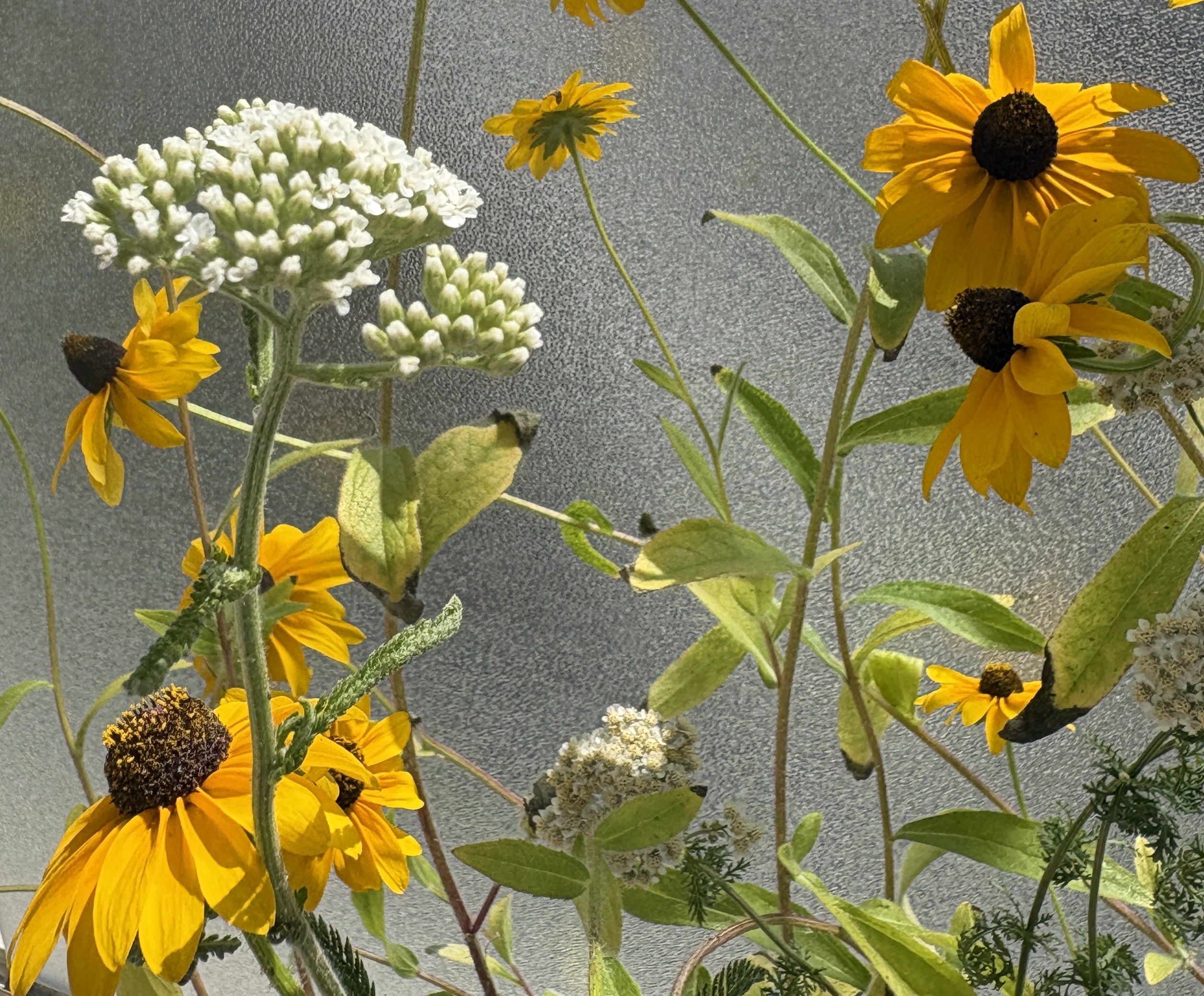
Did you know that in Ontario, some species of birds, butterflies and other pollinators are endangered? If your live in a big city and you have a balcony, you can actually help support and bring back local nature in a simple but surprising way: planting native plants in containers on your balcony! Here is my experience to help you get started.
How it all started…
In Toronto, I have big balcony in my building complex on the 12th floor. My wife, daughter and I are used to planting tomatoes and “pollinator” flowers every year. At the end of fall, we empty our pots and throw the plants and dirt in the organic bin of our building.
This year, my wife found an Instagram account of someone showing how he grows native plants on his balcony. From winter to summer, month after month, he likes to film his plants progressions and show people how bumblebees and other native pollinators are visiting the plants. I thought the idea to be able to leave the native plants on the balcony during winter and see them grow again and flower in the spring is amazing!
We realized this account belongs to a neighbour living in our apartment complex (prince.of.nature). I wanted to learn more… I bought a few plants and entered into contact with my neighbour as I found his practice fascinating. He gave me a few native plants, and recommended a great native plant book to read. A few weeks later, a few pots became a beautiful spot and habitat for local native pollinators from Toronto.
Nature is slowly coming back…
The process of planting the plants, seeing them flower, and discovering species of butterflies or bumblebees I never noticed before is fascinating… We are not speaking of the honeybees here (these actually came from Europe), we are speaking about friendly insects that were living in Toronto before the city even existed!
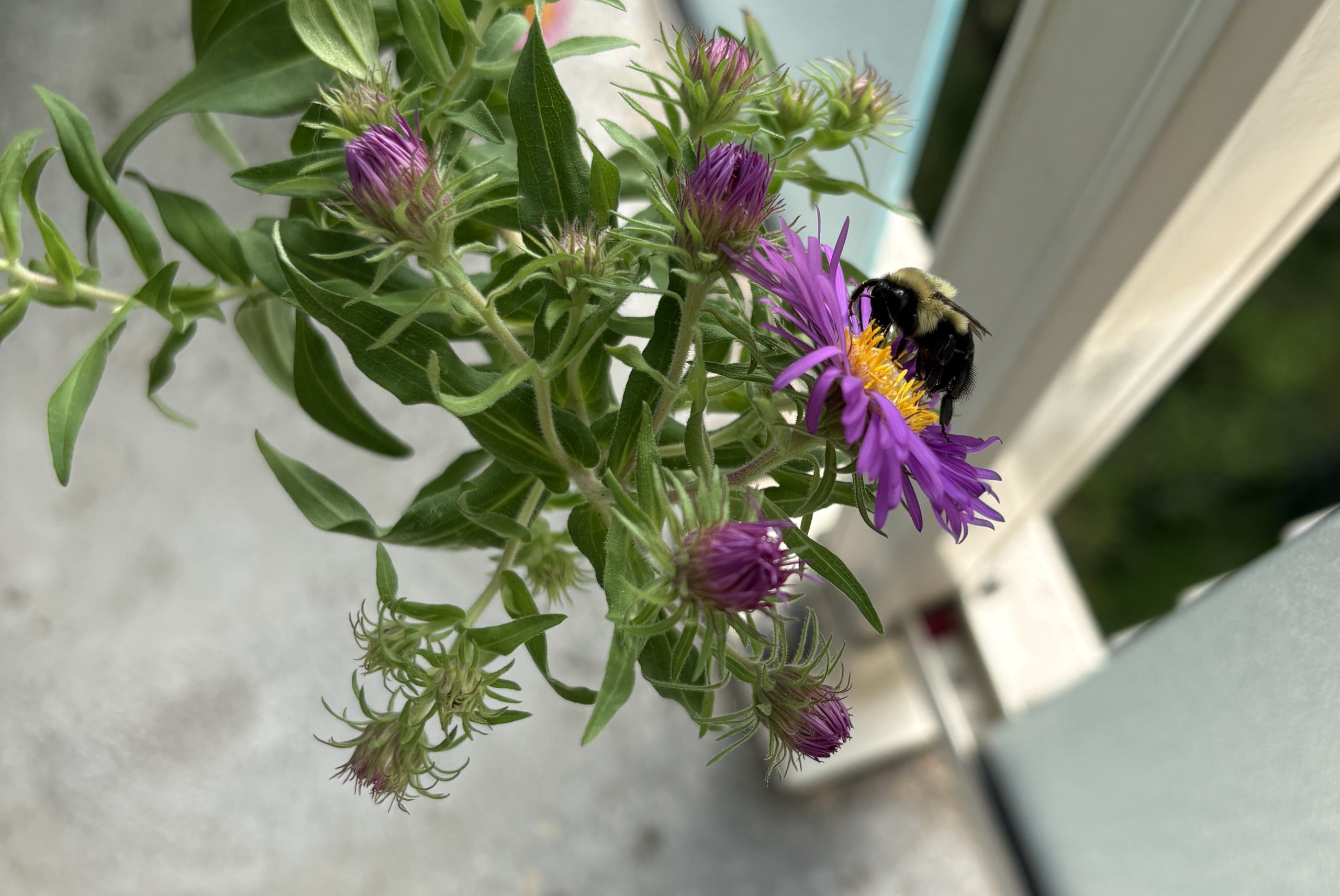
Speaking of bees only, the city of Toronto counts more than 360 native bee species. Most of these Toronto native bees do not sting and live in solitary. A lot of them are endangered in the city because of habitat loss. The city keeps building and the specific native plants that are providing food or home to these pollinators are destroyed and not always replanted.
Today, in Toronto and in other big cities all around the world, we start to understand the helpful impact of protecting native faun and flora to fight global warming. The city of Toronto is even providing grants to help schools and local communities to rewild the city with native community gardens!
Native plants in Toronto are also attracting the Ruby-throated hummingbird and the Monarch butterfly. Who knew? This popular hummingbird and butterfly species are also native to Toronto and spend a lot of time in the city around the end of the summer. Isn’t it remarkable that you don’t need a house and a big garden to help all these pollinators? Even your small balcony can make an impact.
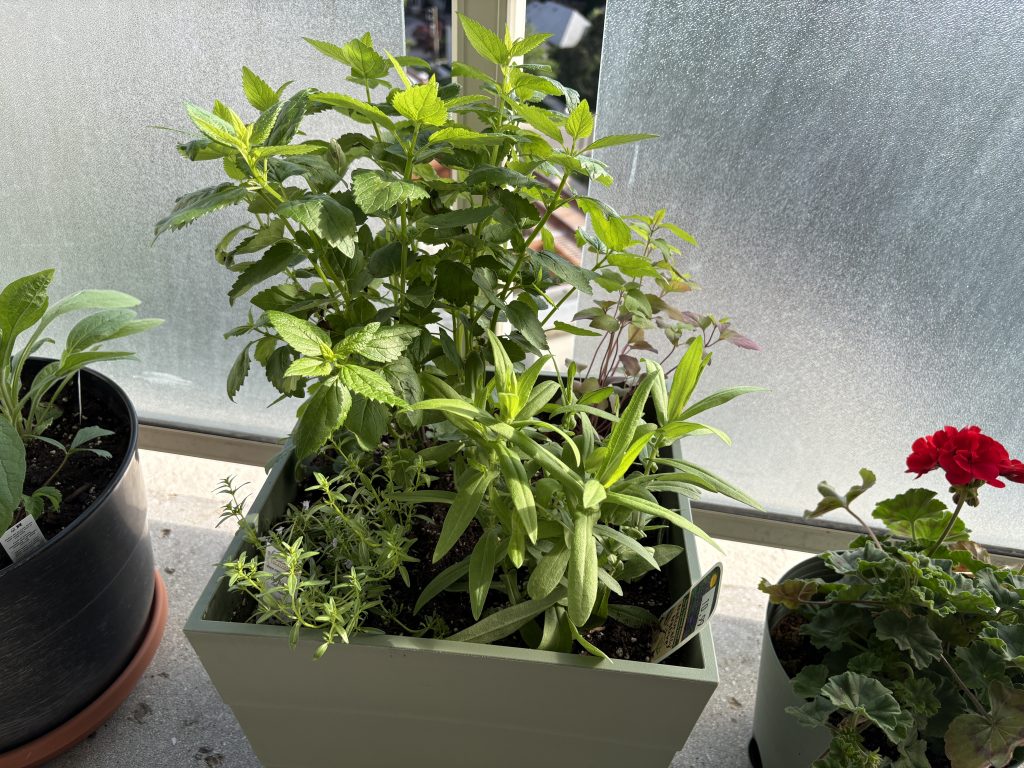
The beginnings of my own native plant balcony garden in Toronto
I planted 3 pots with native plants in June. One pot has a water reserve and is winter resistant. The other 2 are pots with drainage holes that I used in the past for tomatoes. Then, I added a forth container in October with a water reserve.
This last pot does not have much plants in it yet. I planted native plants seeds in it a few days ago. I just used regular potting soil. Of course, the idea is to leave the pots outside during the big frost. Most native plants seeds from Ontario need the freezing cold to activate their germination process, and it has a very scientific name: cold stratification!
If everything goes well, the seeds and plants should germinate or come back at the beginning of spring next year. The idea sounds really crazy to me. Talking to my neighbours, everyone is bringing their balcony plants indoors because the days are getting colder. After all, who wants to stay outside in minus 20 degrees Celsius? Well, our local raccoons, owls and other wild life do it, so why can’t our plants after all?
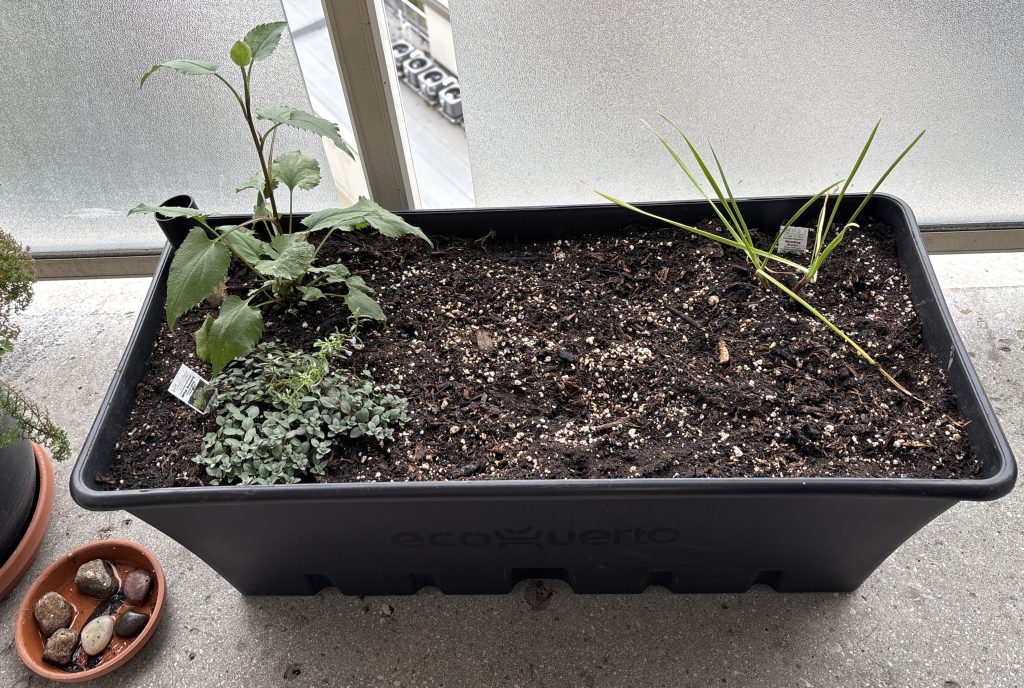
Covering the seeds or not?
According to multiple people I met at the Toronto Region Conservation Authority, there is much debate on the best way to plant your native seeds in Southern Ontario. Some passionate native plant gardeners insist on throwing seeds on top of the soil, or on top of the snow. Some prefer to lightly cover the seeds with soil while others, not at all.
One thing is sure, November (even December…) is a great time to start planting your seeds if you want to let mother nature run its course!
My native plant balcony garden list
There are hundreds of flowers and plants to choose from. According to my research, the plants I selected will allow for some flowers to grow somewhere between April and the end of October. They usually are fine growing in deep pots or big containers. Most of them like to be in a sunny or partially sunny spot as my balcony is quite sunny.
The Toronto native plants I have right now in pots are:
- Wild Savory (Clinopodium arkansanum)
- Anise Hyssop (Agastache foeniculum)
- New England Aster (Symphyotrichum novae-angliae)
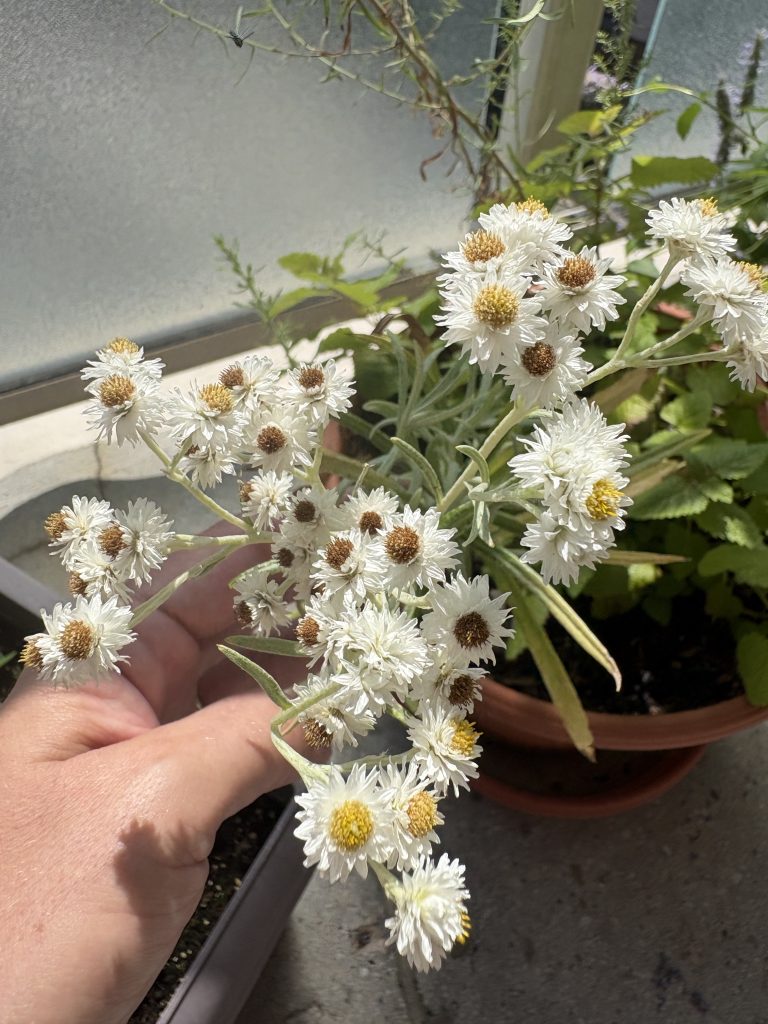
- Pearly Everlasting (Anaphalis margaritacea)
- Heath Aster (Symphyotrichum ericoides)
- Black Eyed Susan (Rudbeckia hirta)
- Yarrow (Achillea millefolium)
- Wild Strawberry (Fragaria virginiana)
- Nodding Onion (Allium cernuum)
- Heart Leaved Aster (Symphyotrichum cordifolium)
- Pale Purple Coneflower (Echinacea pallida)
This month, I also planted the following seeds.:
- Showy-Tick Trefoil (Desmodium canadense)
- False Sunflower (Heliopsis helianthoides)
- Joe Pye Weed (Eutrochium purpureum)
- Blue Vervain (Verbena hastata)
- Wild Bergamot (Monarda fistulosa)
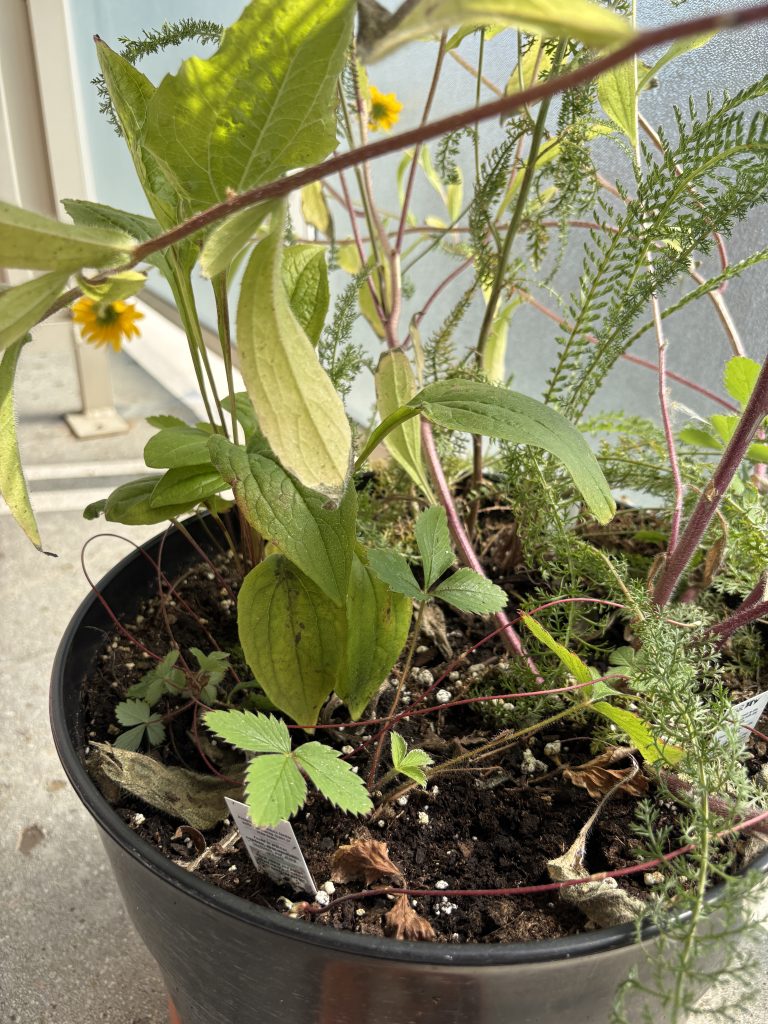
How to create your own native plant balcony garden in Toronto?
If you have a shaded balcony, you can still plant different native plants that will do better in shade. A list of plants to start is available in the free guide “A flower patch for the Rusty-Patched Bumblebee” published by the Canadian association Friends of the Hearth.
I hope my experience will encourage you to start a native plant container yourself. Together, we can all make the city a bit greener and help native pollinators that are endangered in Toronto. To follow the evolution on my native balcony containers, please follow my instagram account and come back regularly on this blog.
Happy planting! 🙂